Posted: September 24th, 2010 | Author: jenny | Filed under: Uncategorized | 1 Comment »
Bogus recovery is…
1)Â When unemployment is worse today than it was at the lowest dip of the recession you are supposedly recovering from.
2)Â When housing sales just fell 27% at the same time foreclosures rose 25%, yet you need to be amongst the top 25% of earners in order to afford a median priced house in many areas of the country.
3)Â When unlisted foreclosure inventory is twice as big as actual “for sale” listings, and actual listings are at record highs.
4)Â When you hear the recession has been over for almost a year and a half but you still haven’t gotten back those hours that were cut from your work schedule even after it had already ended.
5)Â When you are entitled to use the prefix “Doctor” before your name, but your address is the same as your parent’s.
6)Â When the party tent that once doubled as a garage for the vacant house around the block has corroded to the point where all that remains is a cracking white plastic frame surrounded by strewn scraps of discolored canvas, yet there is still no “for sale” sign out front.
7)Â When the government’s best plan for creating jobs means your grandchildren will be paying for infrastructure improvements to bridges and roads designed for cars they will no longer have the fuel to power.
8)Â When the whole banking system is floating on top of a vast pool of rotting mortgage related assets but is still using property values based on peak bubble prices to balance it’s books.
9)Â When you just graduated last spring with $150K in student loan debt, but your best strategy for actually getting a job is to lie on the application at the seasonal Halloween costume outlet and pretend you never went to college.
10)Â A jobless recovery.
Market Watch
Believe It or Not
Irwin Kellner
September 21, 2010
http://www.marketwatch.com/story/recessions-end-means-relapse-2010-09-21
Fox News
US Homes Lost to Foreclosure Up 25 Percent
September 16, 2010
http://www.foxnews.com/us/2010/09/16/homes-lost-foreclosure-percent/
Posted: September 12th, 2010 | Author: jenny | Filed under: Uncategorized | No Comments »
Welcome to Summer Slam 2010! The crowd is abuzz with anticipation. Tonight is the night the reigning heavyweight champion defends his belt against a mysterious new contender in a knock-down-drag-out wrestling match for the coveted title of DR. DOOM. Electric guitars scream over the din of double base drums as the audience writhes in the pulse of the heavy beat. We’ve got ringside seats. A hush spreads over the crowd as the lights dim and the announcer takes the mic.
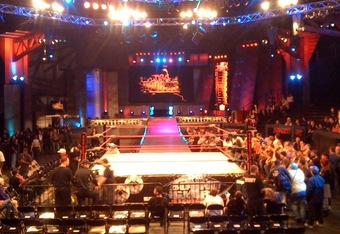
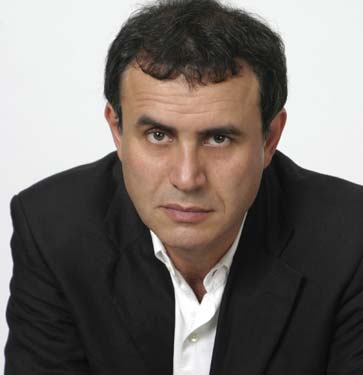
“In the far corner wearing a black smoking jacket and purple shorts is tonight’s defending champion, world renowned NYU economist and author, Nouriel Roubini!”
The crowd cheers wildly. No one is more pessimistic than Roubini. Who would dare to enter the lair of this dragon? A spotlight hits the back of the stage above the ring, and a great door slides open revealing nothing but darkness. The music shrieks and pounds louder. Suddenly a masked stranger steps from the shadowy space into the spotlight, seemingly taller than the door itself. He approaches the ring and with one arm swings up over the top rope, landing face to face with his contender. Who ever could this masked man be? Â The stranger pauses, breathing slowly, his hulking muscular form gleaming against the dark smokey backdrop. He reaches up slowly with one hand and tears the mask from his face, revealing his identity.
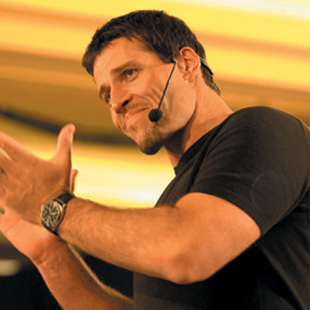
The glare of an enormous white smile sends a shock wave through the audience. Could it be…? Is it possible…? Before us stands none other than the king of personal power himself, motivational speaker and human potential coach Anthony Robbins! Fists pumping the air overhead, he circles to greet the whole audience with all the bravado and determination of a great warrior. Then, turning back to his opponent and adjusting the microphone on his headset, he bends and leans in to begin the match.
“Let’s get ready to rumble!”
The announcer steps away, and the fight is on.
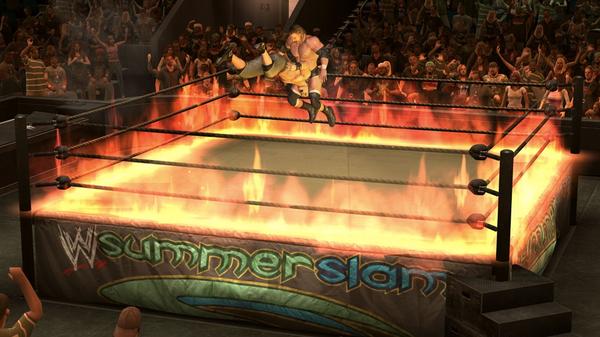
Wow, and what a fight it turned out to be. Surely a night to remember. Roubini moving from overhead chop to stinger splash and Robbins countering with a flying clothesline. No one expected to see the stink face that night… and then both of them ending up in a double hair pull! It took twenty minutes for the ref to untangle them. We still don’t know what the outcome was. I suppose Robbins won, since he grabbed the belt and ran. The guy is unstoppable. However, the organization is still investigating whether or not he actually qualified in the first place. He’s not a licensed economist, after all. Â I’m sure everything will fall into place in time. As they say, it’s not about whether you win or lose, it’s how you play the game. These guys put on a hell of a show.
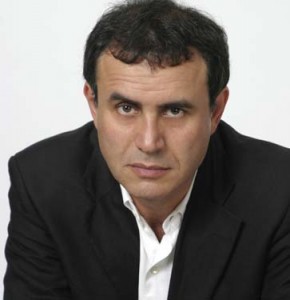 Anyone following economics will be familiar with Nouriel Robini’s pessimistic views of our future trajectory. He was one of the earliest economists to predict the housing bubble and economic crisis that would ensue. His predictions were initially met with skepticism and even disdain, earning him the nickname “Dr. Doom.” His latest book, Crisis Economics: A Crash Course in the Future of Finance, tells all. You can hear some of Nouriel Roubini’s current views in his latest interview on the Charlie Rose show. A link is provided below.
 The surprise appearance in the doom-n-gloom arena is that of Tony Robbins. He has made a living cultivating the power of positive thinking. Can he really be pessimistic on the economy? The answer is yes. He warns of a major retraction ahead, describing this time as the beginning of an economic winter and urging us to steer clear of exposure to the stock and housing markets. But in perfect powerful and positive form he also looks at the crisis from a larger perspective, diminishing fear and pointing to opportunities that will arise out of the disaster. He even lays out a step-by-step plan to survive and emerge profitably from the dark times. As coach to some of the world’s most successful investors and business people he might just understand a thing or two about what’s in store and how to weather it.
Nouriel Roubini interviewed on Charlie Rose
May 11, 2010
http://www.charlierose.com/view/interview/11003
Anthony Robbins Business and Finance Blog
An Important Note of Caution
August 3, 2010
http://business.tonyrobbins.com/78/an-important-note-of-caution/
Posted: September 10th, 2010 | Author: admin | Filed under: Site Notes | No Comments »
Excuse our wet floors. Â We’ve just swabbed the poop deck!
- The port of call is now paperboat.studiopod.com.
- The FeedBurner feed has been changed to thepaperboat which is worth noting if you’ve previously subscribed via [RSS] reader.  Re-subscribe or update your reader.
- If you wondered why a notification for 10 older articles appeared in your email this morning, that was FeedBurner getting really excited to see more items in our feed, which now is set for 20 summaries instead of 10 complete articles.
- And finally, we’re waiting for FeedBurner (recently assumed by Google) to inherit the proper return address in the email announcements.  If you happen to Reply to those email announcements, it should be jenny at studiopod.com instead of stuiopod.com (missing ‘d’), which was a typo.
Thank you all … raise the mainsail!
Posted: September 9th, 2010 | Author: jenny | Filed under: Uncategorized | No Comments »
Around the middle of last week, I noticed a ton of new blog posts popping up on the internet calling for an end to subsidies in the housing market. “Let the housing market crash!” seemed suddenly to be the prevailing sentiment. The outcry came on so quickly and so strong it resembled an organized effort. It was such a striking phenomenon I felt it must indicate our arrival at some sort of tipping point. Lo and behold, the following Monday the New York Times and Los Angeles Times both ran articles on the subject and yesterday it was all over National Public Radio. When bloggers and major news media align with such force and unity there is definitely something significant afoot. Revolution is in the air. People are mad as hell and they’re not going to take it anymore. I have maintained since the initial run up in prices that housing is vastly overpriced and needs to fall dramatically in order for the market to reach economic sustainability. The national recovery depends on it. It has always perplexed me as to why we haven’t heard more outrage over the subject or even discussion of it in the press. Now, four years after the peak of the housing bubble the topic has finally surfaced, and with a vengeance.
Two years ago, when the Bush administration was conjuring up its now famous TARP bailout effort to buy or insure up to $700 billion of troubled assets, I wrote a letter of protest to Congresswoman Barbara Boxer. I was outraged by the idea that after enduring years of housing bubble mania I, along with every other responsible tax paying citizen who’d done the sensible thing and resisted the pressure to gamble away every last dollar on ponzi real estate opportunities, was now going to be held responsible for the cost of the debt left in its wake. I advised her that we should not participate in any effort to forestall foreclosures or prop up housing prices, as not only was it futile, terribly expensive and would cause further damage down the line but it was just generally unfair and an outright moral hazard. My thought was that if we were going to spend government money on cleaning up the mess we should let the free market take care of pricing and invest our dollars in something that might actually make a difference. We could, for example, focus on educating our children in economics and personal finance, a subject virtually nonexistent in our public school curriculum at this time. Obviously my advice was either never considered or it was just thrown to the curb with the rest of that week’s trash, which of course I expected would be the case. All I got in return was a lousy form letter talking about the virtues of stimulus and all the sad families who would be unable to stay in their homes.
Well, let’s talk about that for a moment. I don’t mean to make light of the tragedy of foreclosure, but why on earth is it my responsibility to keep people in their homes when they obviously didn’t even take a moment to do any homework before signing off on a loan they could in no way afford to pay? And the reality is many did know they couldn’t afford to pay but signed anyway, gambling their money on a bet that housing would appreciate enough to put them ahead on the deal. If you lost on that kind of gamble in a Vegas casino, would the taxpayer be expected to foot the bill? The mere suggestion is laughable.
I was a humble renter at the time the housing bubble started to inflate. I lived with my husband in a modest suburban house with a big grassy yard and an office from which I ran my small freelance animation business. At the end of 2004 our landlords decided to refinance and pull their growing equity from the place, and they raised the rent to close to double what we’d been paying. We’d been there ten years. We were forced to move. I had a two month old baby and it was right before Christmas. Now, being a renter I’d always known there was some impermanence to the situation, but this transition played out so quickly and with such brutal timing we were left reeling. My brother had come to visit from out of the country and spent his holiday packing boxes with us as our landlords paraded prospective tenants in and out of the house, through our strewn belongings and our sleeping newborn’s room. We lost our home. It was messy and terribly unfortunate, but totally legal (believe me, we looked into it!). The government offers nothing in the way of assistance to people in our position. We were lowly renters and not deserving homeowners. No bailouts available.
We moved and resettled into an apartment half the size with no yard, and have since had another baby. I no longer have a studio space, but as I’ve decided to stay at home to raise our kids I can do without that for now. We don’t have much room, but we are living within our means. We are debt free. We are waiting until it makes financial sense to buy a home. When we were forced from our last place, I’d have thought the bubble would be long past us by now. That bubble grew into a real dragon though, and there’s still a long way to go before we see the end of its reign.  Yet, I have much to be grateful for. I have my family. We have a decent place to live in a relatively nice section of town (rent controlled, this time!).  We have flexibility and we are still able to build toward our dreams. We are thankfully not one of the many families facing foreclosure today. One plus side of renting is that if you lose the place it doesn’t touch your credit score.
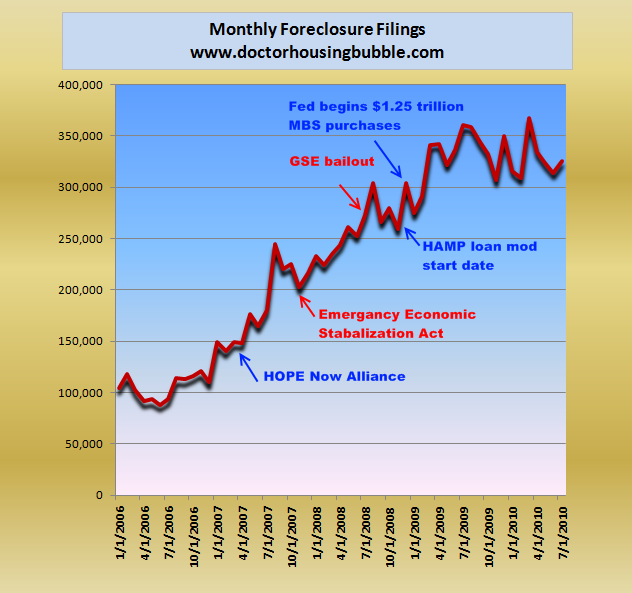
So, what ever happened to all that TARP money anyway? Apparently it didn’t do anything to prevent foreclosures or stabilize housing prices. At best it prolonged the anguish by slowing the fall somewhat. And those troubled assets it was supposed to take care of (the whole point of the TARP bailout) are still on the books of the banks that held them then. What a waste! And what a lovely gift to leave our children, who will still be paying the bill after we are all dead and gone. I ran across this  fantastic chart at the Doctor Housing Bubble website a couple weeks ago showing the progress of foreclosures since the peak of the housing bubble.  (Click on chart to enlarge.)  It is remarkable for a couple of reasons. First, you can see that we are now far beyond the number of repossessions that led us into economic crisis in the first place and caused the stock market to spontaneously lose over a third of its value. Secondly, we can see clearly how none of the government programs aimed at preventing foreclosure have had any lasting effect at all. The truth is, the tsunami is too big to stop. We are talking about the deflation of an eight trillion dollar housing bubble. That’s a lot of evaporating wealth. Seven billion dollars of TARP money (and whatever we’ve spent on the rest of those programs) just isn’t going to buy enough sand bags to hold that sucker back.
As we sit discussing strategies and kicking around our various measures to deal with the housing market, prices just keep sliding steadily down… and so it will continue until working fundamentals are reached. Water seeks equilibrium. With every new program the government employs more of our money is wasted. In fact, the only people who’ve received any real help out of it all are big banks, corporations and Wall Street. Housing prices will not stop falling until real household income can justify the cost of a home, and real household income is diminishing every day.
Perhaps one of the most shocking aspects of the whole story is that despite the fact that most of the toxic loan products that created this mess are no longer available, many people have continued to put their financial well being at risk buying overpriced houses they can’t truly afford. Where I live in Los Angeles, housing in some places is still in the bubble high range with many neighborhoods costing six times or more what local income can support. How, you might ask, is this happening? Well, it’s happening because the government has stepped in where the defunct bubble lenders left off. Countrywide is out of business but the Federal Housing Administration stepped right up in its place offering loans with three percent down in a market overpriced by fifty percent. Currently at least four out of ten loans in Southern California are backed by the FHA. This is an agency that was created to help lower income folks who were struggling to buy a modest home. The agency is now backing loans on three million dollar apartments in Manhattan. We are already seeing huge default statistics on these government insured loans, yet the government keeps the supply going and people keep signing the paperwork. That dream of home ownership sure makes folks crazy. And the very bad news again is that taxpayers are going to be on the hook for these souring FHA loans. We’re talking about hundreds of billions of dollars of loans.
I want to touch upon the concept of moral hazard here. Simply put, moral hazard occurs when a party is not held responsible for it’s damaging actions. This results in creating an incentive for that damaging behavior to continue. A party that is insulated from risk tends to behave more recklessly than if it had been fully exposed to that risk. If a company is deemed “too big to fail” and rescued from the loss of its bad investments by the government, for example, it will be more careless with risk taking in the future, knowing that failure will not be a consequence of bad decision making. If people who gambled on housing and lost are bailed out they will tend to feel it is safe to repeat the behavior that put them at risk of foreclosure in the first place. In other words, lessons will not be learned and in some cases justice will not be served. There is dignity in facing the consequences of one’s actions and taking responsibility for them. To prevent people from experiencing consequences is to rob them of dignity and the opportunity to learn and grow. It is condescending and treats adults as children, emphasizing victimhood and robbing people of their power.
 Let the housing market crash? Do we have a choice? It is crashing anyway. Nothing has or will be able to stop it. Foreclosures are at record highs. Unemployment is as well. July saw a drop of 27% in sales of existing homes across the nation. Prices are bound to follow. So yes, let’s at least stop throwing good money after bad on ill conceived bailout plans and come up with a more effective way of helping people through this mess.  Get something new going.  If we must throw money at something, how about we try flowing a little cash the way of small business, exploratory science and arts, or financial education. Maybe start living within our means and saving for a change.  Now that’s a novel idea.  It’s time to pay the piper, folks. It isn’t pretty but we all played some part in getting here. This is an opportunity to get clear about what that part might have been. Then maybe we’ll have an opportunity to do things differently next time around.
Dr. Housing Bubble
Countrywide and Pay Option ARMs on Trial
August 26, 2010
http://www.doctorhousingbubble.com/countrywide
Dr. Housing Bubble
FHA Has Become the New Toxic Lender of First Resort
August 15, 2010
http://www.doctorhousingbubble.com/fha