Posted: August 12th, 2010 | Author: jenny | Filed under: Uncategorized | No Comments »
Have you heard the news? The median home price is going up! I heard about it on National Public Radio yesterday. That must mean this recovery thing is working out after all. Yahoo! We’re all gonna be rich again! But wait a minute, I also heard yesterday that the stock market fell over 265 points on fears that the economy is headed for further trouble. Hmmm… maybe I’ll put that champagne back on the shelf till I take a closer look at this one.

…the grand old Duke of York,
he had ten thousand men;
he marched them up to the top of the hill,
and he marched them down again…
Okay, well upon taking a second look at the situation I’m afraid my bottle of bubbly’s gonna have to do a little more shelf time. Put away the glasses. It seems we are merely witnessing the effects of that old $8K federal tax credit here. The increase in median we are witnessing is due to numbers from April through June, when people were frenetically trying to get in on the tax credit before it expired. What’s more, when we look closely at the statistics we can see that they represent only major US cities- and just two thirds of those at that- according to the National Association of Realtors, who authored the report. For the greater US, the national trend was actually flat. Well, at least flat is not a decline. Or is it?
…and when they were up, they were up,
and when they were down, they were down,
and when they were only halfway up,
they were neither up nor down…
This brings us to a point you don’t hear about much in the media. You can’t trust the median home price to let you know what’s happening with real estate values. It is not a precise indicator of the overall trend. Why? Because housing prices are actually moving differently depending on price bracket. The low end hit a level of affordability a while back, but the mid to high end markets are still in a bubble and overpriced. What’s happening now is we are seeing higher priced homes in more desirable areas beginning to fall to a level that is somewhat affordable. As people begin to buy homes in the mid to higher end of the market, the median is driven up. Prices overall are not rising, but more expensive houses are selling because they continue to fall in price.
Allow me to illustrate. Let’s say there are four homes that have recently sold in total. They are in lower priced areas that are less desirable to the majority of buyers, and three of the houses sold for $100K while one went for $200K. The median price would be $100K, meaning that half the homes sold below that price and half sold above it. Now let’s say time goes by and we start to see prices falling in the mid tier market. The fall in price is delayed in this market in part because of the nature of the loans that most homes were purchased with, which I will explain in more detail later. The mid tier market consists of homes in safer areas with amenities such as good public schools, clean parks, or access to a wider variety of shopping and entertainment. As the mid tier is hit with a wave of foreclosures, homes that were priced at $700K begin to sell at $400K. There are a lot of people waiting to buy who didn’t want to purchase in a low end area. Now they see their chance to move forward. It’ll probably be a stretch, but they realize they can finance a home at $400K through the FHA with a 3% down payment. They begin to jump in.
Suddenly we see homes selling at higher prices. This gets factored into the median. If we throw a couple of houses priced at $400K into our earlier equation, the median shoots up to $200K. Now we have six homes with half the homes selling for less than $200K and half for more. The median home price has risen by $100K. Are home prices rising over all? No. Home prices are falling in higher priced markets and that causes the median to rise. Initially, the only homes selling were in low priced markets and now there are homes starting to sell in the mid tier. As the mid tier falls in price and begins to become affordable it puts further downward pressure on the low end, so prices there continue to fall as well. Why buy a house in a low end neighborhood when you can get one in a nicer area for a fraction more – or maybe for the same price if you just wait a little longer? The low end cannot compete and will have to drop prices even further. In no way are prices going up over all.
It is helpful to think of the housing market as being more like four separate markets right now. These are the low end, the mid tier, the high end and the super rich. The latter is sort of an obscure category in which very few can afford to buy, as it consists of houses over $20 million or so. Historically it has operated independent of trends that affect the rest of the market, but in this economy even those properties are losing value and seeing price reductions.
 The reason the different pricing tiers are falling in value at different paces is due largely to the way home purchasing was financed during the bubble run up. Generally the low end market was sold using suprime mortgages, while the mid to high end was sold using Alt-A and prime loans like Option-ARMs. In simple terms, the higher end loans had longer teaser rate periods before the monthly scheduled payment would be recast. The real estate crash began with defaulting subprime loans. All that inventory has just about cleared in terms of defaulting, though there is still plenty of low end inventory on the market and in REO limbo under bank ownership, which has yet to hit the market. However, we have yet to experience the full impact of the wave of foreclosures hitting mid to high tier markets as Option-ARMs and prime and jumbo loans default.  This chart from Credit Suisse has been circulating on the internet for years, but it’s worth another look and perhaps some of you haven’t seen it yet.  (Click on chart to enlarge.)  We are still beginning our climb to peak second wave default. Remember, the first wave brought the whole economy down like a house of cards.
The defaulting of Option-ARM loans alone will push prices lower ahead. We are just beginning to see this happening. Defaults are happening at record numbers but it will take some time before we see them hit the market in full force as they get caught up in the pipeline of the foreclosure process. California will be hit hardest, as more than half the Option-ARM loans issued were in that state alone.
 Foreclosures are at an all time record high across the country right now, with bank owned inventory at Freddie Mac having increased almost 80% from this time last year. Unemployment is, of course a huge factor as well. With these forces converging upon the housing market at once I cannot imagine any real sustainable price increase in housing for a long time to come. In fact, I’d predict we see quite the opposite effect with the correction continuing to the downside.  Here’s another pertinent chart I stumbled across recently at Calculated Risk, showing the default in government insured loans at Freddie Mac, which doesn’t even include the huge pot of California jumbo loans that are too expensive to be covered by the institution.  (Click on chart to enlarge.)
So as you can see, the median price may be rising in the housing market, but over all prices are headed down.
Forbes
House Prices Are On The Rise, But It Doesn’t Mean Much
Francesca Levy
August 11, 2010
http://blogs.forbes.com
Real Estate Channel
California Median Home Prices Increase 23.2% in May, Sales Up 1.2%
Michael Gerrity
June 23, 3010
http://www.realestatechannel.com
DQ News
Southern California Home Sales Dip, Median Price Rises From ’09
May 18, 2010
http://www.dqnews.com
Duke of York illustration, Steve Morrison
Posted: August 5th, 2010 | Author: jenny | Filed under: Uncategorized | 3 Comments »
One of the tools we can use to assess housing prices in a specific area is the income to home price ratio. Generally, median disposable household income should be able to support the median home price.  Disposable income is gross income minus current taxes.  The traditionally sound formula for assessing whether a particular home is affordable is that the home should not exceed two and a half to three times the buyer’s household income. Certain metropolitan areas can be more expensive and the ratio might run a bit wider. Where I live in Los Angeles, for example, we have historically seen a ratio closer to three and a half times annual income.
From time to time I like to take a look at home pricing in a particular neighborhood in the Los Angeles area. A couple of months ago I examined the situation in Burbank in my post LA Housing Is Still Too Expensive .  At the request of Xtine from the blog Flip City I have now run the numbers for Echo Park.
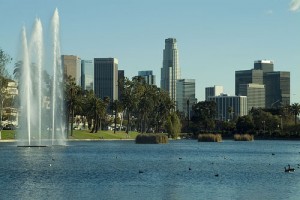 Echo Park is an older Los Angeles neighborhood just northwest of the downtown area. By older, I mean largely built up in the 1920s and ’30s. It was initially the bedroom community of the silent film industry and later became a predominantly working class Latino community. It has always been known for its artists and bohemian culture. Echo Park has seen a lot of gentrification over the last fifteen years or so, which really picked up during the housing bubble years with all the excess faux wealth floating around. Prices skyrocketed during this time and it is now unaffordable to most prospective buyers. But is this justified? Let’s take a look.
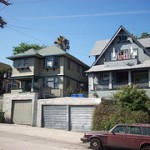 The annual median household income in Echo Park is around $36,000 as of 2008, with close to a third of households living under the poverty line. I was not able to find newer statistics regarding income, but I don’t imagine it has risen over the past two years. Given the 12%-plus unemployment rate in California and continuing budget cuts and furloughs, I think we can assume this number has not grown much, if at all.
The median selling price of a single family residence in Echo park from April through June of this year was $374,000. This is far below the lofty median of $680,000 we saw at the bubble’s peak, but still up $79,000 from last year. I imagine the latest bounce was due largely to buyers rushing to get in on the federal tax credit that came to an end during that period, thereby creating a temporary surge in demand.  If we look at the market without the stimulus of the tax credit we can estimate the median selling price would be around $300,000.
 So, let’s examine the income to home price ratio and see where Echo Park stands in its current valuation. If we take the statistics at face value we can see that with an annual household income of $36,000 in the area the median home price, at three times that, would be justified somewhere in the area of $108,000. If we consider that this is historically a somewhat more expensive area and run the figure at four times the annual household income we can see the median priced home should be running around $145,000.  Note that I am using gross income statistics here, not the reduced disposable income figures which would really afford less than that.
So in the very best case scenario for home price valuation we are looking at an ideal median price of $145,000 for Echo Park, but the actual home price median is running at $374,000!  That’s ten times the median gross income of the town’s residents.  Even if you adjust for the stimulus of the expired tax credit and suppose prices will return to $300,000, you are still looking at overvaluation of more than fifty percent. So we can conclude that prices in Echo Park are still much too high. There is room for home prices in Echo Park to drop by at least half.
Echo Park Income Statistics:
citydata.com
http://www.city-data.com
Echo Park Home Prices:
Trulia Real Estate Search
http://www.trulia.com
Posted: August 1st, 2010 | Author: jenny | Filed under: Uncategorized | 2 Comments »
I’m afraid all the research I did for my last post on the threat of economic depression left me a bit… well, depressed. Economic downturn, PMS and the compulsive mind a bitter cocktail mix. So I have been searching for a quiet spot in the din ever since, and perhaps even one of those elusive green shoots we heard so much about not so long ago. What has come to mind is something I read over a year ago in The Huffington Post. The article was about the California Institute of the Arts and featured the words of the school’s president Steven Levine. Apparently, he is optimistic about the collapse of the economy because he believes it will be good for the arts.
“When you can’t define yourself any longer by what you can buy, you suddenly have to look deeper for what life is about and I think that gives an opening for the arts that it hasn’t had before, an opening for it to matter again,” he explained.
Lavine’s words stayed with me because I’d been having the same thought. I see the potential for deep individual and communal growth to come out of all the loss at hand, a redefining of who we are and what is important to us.  I do not mean to diminish the gravity of the situation, as I know for many the consequences of economic loss have been and will continue to be dire. But having a background in the arts makes me look to the power of the salve it offers, as I imagine the comfort will be welcome in treating the wounds we are left with.  Beyond that, art is the exercise of creativity, and creativity will provide solutions.
 I remember on a trip to the Los Angeles County Museum of Art as a child I came across a statue portraying the Hindu God Shiva as Nataraja, “The Lord of Dance.” He danced in a circle of fire with his hair flowing out behind him on either side and legs and arms bent in motion. I was struck by the form and the symbolism.
You may know the image, as it is a popular portrayal of Shiva. In his upper right hand he holds a drum, on which he creates language with each beat becoming a syllable. In his upper left hand he holds a vessel of fire which gives the power to destroy. Shiva’s dance is one of destruction in order to prepare for creation; it is a symbol of the cycle which gives rise to both forces and binds them inextricably together. That which is no longer stable and useful must be cleared to make room for new growth. A third hand is held in a gesture of fearlessness. This gesture assures us of the stability of the world. And herein lies an important idea. Shiva remains serene and upright in the midst of the whirling battle that surrounds him. There is a profound balance maintained as the forces of creation and destruction converge in their fiery cycle.
 If we look closely at Shiva’s hair we see the currents of the mighty river’s flow, with Ganga the river goddess moving through his winding locks. This refers to the story of her descent to earth. In the myth it is necessary for her to come to wash the earth and purify the ashes of the dead, but her descent from heaven threatens to destroy the whole world. Because of one man’s piety and commitment, Shiva agrees to break the fall of the river goddess, and the flood crashes into his hair before splashing safely to earth. Ganga’s great river purifies all in its path and the earth is reborn.
Here The Paper Boat finds itself tripping along the ripples of sacred waters. We enter a time of great destruction, but amidst the chaos an opening emerges. A clearing grows. We find ourselves facing the dilemma opportunity presents. There is space developing for something new. What will it be? What do we paint upon the blank canvas? Nature abhors a vacuum. Something will be built. If we embrace the challenge there is opportunity for evolution here. Creativity is the key.
“Drifting
On a sea of forgotten teardrops
On a lifeboat
Sailing for your love
Sailing home”
– Jimi Hendrix
The Huffington Post
Culture Zohn: Cal Arts: The Wild West is Alive
Patricia Zohn
May 8, 2009
http://www.huffingtonpost.com
Posted: July 28th, 2010 | Author: jenny | Filed under: Uncategorized | No Comments »
Last month Nobel Prize winning economist Paul Krugman of the NY Times put forth a dire warning that we are in the beginnings of a third depression. There have been two already in US history, the Long Depression that followed the Panic of 1873 and the Great Depression of the early 20th Century.

“We are now, I fear, in the early stages of a third depression. It will probably look more like the Long Depression than the much more severe Great Depression. But the cost — to the world economy and, above all, to the millions of lives blighted by the absence of jobs — will nonetheless be immense,” Krugman writes.
Most agree it was a failure of economic policy that brought us to this point. However, the proposed solutions differ greatly among various economists and business leaders. Krugman’s Keynesian approach would be to increase stimulus spending, but critics argue that this approach has been ineffective so far and warn against the consequences of driving deficits to even more precarious heights than where they now stand.
“In the last two years, we’ve had gargantuan spending and ultra-easy money,” says CNBC host Larry Kudlow in an interview with CEO Steve Forbes of Forbes magazine, “which is what Professor Krugman has been advocating the whole time. And he still thinks we’re in a depression. So I need to ask you, maybe his policies are what threaten the depression.”
“Well, it’s like the old physicians who continue to bleed the patient and wonder why the patient isn’t getting better and then bleeds the patient even more,” Forbes responds. “What we should be doing, yes, we should be cutting back spending because it takes money from productive citizens.”
Fiscal conservationists (a.k.a. “deficit hawks” to those who side with Krugman on this issue) maintain the US national debt is already at a tipping point and taking on further debt would threaten to push the country itself into bankruptcy. They also point out that the consumer is tapped out between personal debt, diminished credit and unemployment, and simply cannot afford to pay higher taxes or subsidize further bailout programs.
Liberal economist and co-director of the Center for Economic and Policy Research in Washington D.C., Dean Baker, sides with Krugman. He likens the stimulus effort to trying to put out a forest fire with only a few buckets of water. He explains it’s not working because we need more water.
“I mean we lost over a trillion dollars a year in annual demand. We tried to replace it with the stimulus that it came to from the federal sector about $300 billion a year, you subtract out the cuts at the state and local level, that’s $150 billion a year. Where I come from $150 billion isn’t going to make up a loss of a trillion. That’s simple arithmetic.”
As the debate rages on about how to deal with the fiscal crisis in which we find ourselves, more and more economists seem to agree that difficult times lie ahead. We may even be heading into a real depression. In a recent interview with Charlie Rose, NYU economist Nouriel Roubini warned of a looming global crisis. He now says a double dip in the recession has already arrived.
“Fasten your seat belts for a very bumpy ride.† At best, Roubini says, “we face a protracted period of anemic, below-trend growth in advanced economies as deleveraging by households, financial institutions, and governments starts to feed through to consumption and investment.â€
On the extreme end, market forecaster and social theorist Robert Prechter of Eliott Wave International is convinced we are headed for a crisis worse than any we’ve seen yet, with the possibility of the Dow falling below 1000. His analysis is based on principles developed by Ralph Nelson Elliott in the 1930’s, which assert that financial markets move according to complex but predictable fractal patterns based on cycles of social mood among investors.
“I’m saying: ‘Winter is coming. Buy a coat,’†Prechter forecasts. “Other people are advising people to stay naked. If I’m wrong, you’re not hurt. If they’re wrong, you’re dead. It’s pretty benign advice to opt for safety for a while.â€
At the close of the G20 conference in Toronto last month US policy makers seemed to be turning away from the idea of employing further stimulus at this time and toward adopting a plan of greater fiscal austerity and balanced-budget orthodoxy, as the Euro zone has done with verve as of late. Hence, Krugman’s lament.
“And who will pay the price for this triumph of orthodoxy?” he asks. The answer is, tens of millions of unemployed workers, many of whom will go jobless for years, and some of whom will never work again.”
Wherever we may go from here, the fact is we are already experiencing unemployment at depression levels according to the U6 measurement, which accounts for those who are underemployed and those who have given up looking for work out of despair, as well as those who are unemployed and receiving benefits. And there is no visible source of job creation on the horizon. What lies ahead instead is a further rise in unemployment, larger budget deficits, continuing decline in home prices, larger losses for banks, shrinking access to credit and possible protectionist measures that will dampen growth. Depression is upon us.
New York Times
The Third Depression
Paul Krugman
6/27/2010
http://www.nytimes.com
NewsBusters
Kudlow, Forbes Debunk Krugman’s “Third Depression” Call
Jeff Poor
6/29/2010
http://newsbusters.org
New York Times
A Market Forecast That Says “Take Cover”
Jeff Sommer
7/2/2010
http://www.nytimes.com
Moneynews.com
Robini: Don’t Fear A Double Dip, It’s Already Here
Julie Crawshaw
7/22/10
http://www.moneynews.com

 The reason the different pricing tiers are falling in value at different paces is due largely to the way home purchasing was financed during the bubble run up. Generally the low end market was sold using suprime mortgages, while the mid to high end was sold using Alt-A and prime loans like Option-ARMs. In simple terms, the higher end loans had longer teaser rate periods before the monthly scheduled payment would be recast. The real estate crash began with defaulting subprime loans. All that inventory has just about cleared in terms of defaulting, though there is still plenty of low end inventory on the market and in REO limbo under bank ownership, which has yet to hit the market. However, we have yet to experience the full impact of the wave of foreclosures hitting mid to high tier markets as Option-ARMs and prime and jumbo loans default.  This chart from Credit Suisse has been circulating on the internet for years, but it’s worth another look and perhaps some of you haven’t seen it yet.  (Click on chart to enlarge.)  We are still beginning our climb to peak second wave default. Remember, the first wave brought the whole economy down like a house of cards.
 Foreclosures are at an all time record high across the country right now, with bank owned inventory at Freddie Mac having increased almost 80% from this time last year. Unemployment is, of course a huge factor as well. With these forces converging upon the housing market at once I cannot imagine any real sustainable price increase in housing for a long time to come. In fact, I’d predict we see quite the opposite effect with the correction continuing to the downside.  Here’s another pertinent chart I stumbled across recently at Calculated Risk, showing the default in government insured loans at Freddie Mac, which doesn’t even include the huge pot of California jumbo loans that are too expensive to be covered by the institution.  (Click on chart to enlarge.)


